Nine community initiatives. Three localities. Fifty thousand dollars. Between August and October 2025, that combination reached 15,690 people across Tawila, El Fasher and Kabkabiya with shelter, food, protection and clean water.
The scale is modest against the size of the need in North Darfur. What distinguishes it is who did the work.
Under the Sudan Humanitarian Fund, in partnership with Saferworld, Future Stars Center (FSC) channelled the full budget through nine verified community organizations already operating inside the affected areas — organizations that did not need to negotiate access because they had never left.
At a glance
$50,000 total budget. 15,690 direct beneficiaries. 78,450 people reached indirectly. Nine community initiatives across Tawila, El Fasher and Kabkabiya.
Shelter and non-food items
Two initiatives distributed tarpaulins, blankets, mosquito nets, floor mats and bathroom buckets, alongside mattresses, kitchen tools, barrels and jerrycans.
Mayarm Association for Change reached 70 female-headed households. Renas Initiative reached 70 households of women and girls who had newly arrived in Tawila locality — families still in the first days of displacement, when nothing has yet been replaced.
Food security
Food security took the largest share of the allocation at 45 per cent, delivered through communal kitchens and food basket distributions.
Rainbow Organization for Peace and Development provided hospice food meal support to 334 besieged displaced women in El Fasher. Giving Without Borders Organization distributed food baskets of millet, rice, sugar, salt and oil to 200 families in Tawila. Afaq Organization for Humanitarian Aid reached a further 200 affected families in the same locality.
Protection
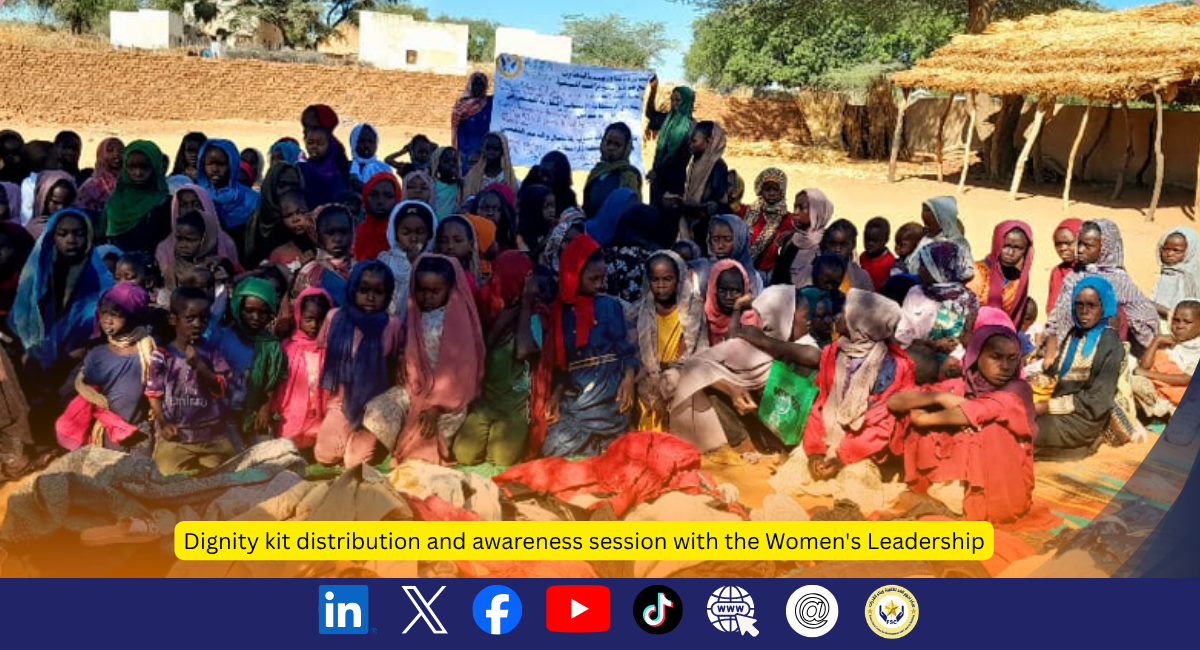
Two women-led initiatives delivered dignity kits alongside awareness sessions on sexual and gender-based violence, paired with capacity building and coordination activities.
The Women’s Leadership Network in IDP Camps reached 150 displaced women and girls in Tawila. Maman Women Association reached another 150.
Pairing material distribution with SGBV awareness is deliberate. A dignity kit answers an immediate need; the session that accompanies it opens a channel through which protection concerns can be raised and referred.
Water, sanitation and hygiene
Two emergency response rooms — the local coordination structures that have carried much of Sudan’s civilian response since the war began — ran water trucking, sanitation and cholera awareness work.
Tawila Emergency Response Room covered 3,600 people across host and displaced communities. Kabkabiya Emergency Response Room reached 10,000 through cholera awareness campaigns and health materials distribution, the single largest reach of any activity in the project.
The nine partner initiatives
Mayarm Association for Change · Renas Group · Rainbow Organization for Peace and Development · Giving Without Borders Organization · Afaq Organization for Humanitarian Aid · Women’s Leadership Network in IDP Camps · Maman Women Association · Tawila Emergency Response Room · Kabkabiya Emergency Response Room
About Future Stars Center
Future Stars Center for Development and Capacity Building (FSC) is a youth-led organization advancing humanitarian support, capacity building, sustainable development and peace-building across Sudan and Uganda. Rather than implementing activities directly, FSC provides structured micro-grants, technical oversight and field monitoring to verified community mutual-aid groups and local civil society organizations.
This project was implemented in partnership with Saferworld and the Sudan Humanitarian Fund (SHF).