At $150,000 across six localities and 33 community initiatives, SHF-4 is the largest project in FSC’s humanitarian portfolio to date. It reached 26,886 people directly with food, shelter, protection, water and health services — and did so through partners who were already living in the communities they served.
The geography tells its own story. Kabkabiya, Tawila, El Fasher, Maliet, El Kuma and Dar El Salam: six localities across North Darfur, several of them absorbing repeated waves of displacement with limited aid presence.
At a glance
$150,000 total budget. 26,886 direct beneficiaries. 161,316 people reached indirectly. 33 community initiatives across six localities.
Food security
Displaced families faced a problem that food distribution alone does not solve: many had no cooking facilities at all. The response used two modalities.
Communal kitchens in El Fasher and Maliet provided daily cooked meals to families without the means to cook — noodles, oil, tomato sauce, salt, sugar, tea, spices, meats, lentils, lamb and vegetables. Beyond nutrition, the kitchens strengthened social cohesion through community participation, giving displaced families a shared daily point of contact.
In Sortoni IDP camp in Kabkabiya, food baskets went to vulnerable families experiencing repeated waves of displacement with limited aid presence — rice, oil, sugar, millet, salt, flour, hibiscus, pasta, lentils, dates, tea, groundnuts and dried okra.
Emergency shelter and non-food items
Essential household items were distributed across displacement shelter centers in Kabkabiya during the harsh winter season, with particular attention to women, children, the elderly and persons with disabilities.
Distributions covered mattresses, blankets and bed covers, kitchen sets and cooking utensils, plates, bowls and cooking pots, tea kettles and coffee pots, water jerrycans, jugs and pitchers, washing basins, winter jackets and warm clothing, women’s clothing, shoes and bags, prayer mats, light batteries, laundry soap, vaseline and cleaning supplies.
Direct beneficiaries: 450 — 179 males and 271 females.
Protection
Protection
The protection component of SHF-4 responded to a fire that reached approximately 550 families in Dali Camp, Tawila, on 9 February 2025, killing a five-year-old child and leaving women, girls and children exposed to heightened protection risks.
The response combined dignity and hygiene kits, winter clothing for children, and psychosocial support delivered through group sessions and child-friendly activities.
Direct beneficiaries: 937 — 280 males and 657 females.
Water, sanitation and hygiene
Activities in Tawila and Kabkabiya addressed the urgent needs of displaced people in overcrowded displacement centers.
Emergency safe water was delivered by tanker to IDP camps, with distribution points established to ensure equitable access. Hygiene promotion sessions covered safe water handling, personal hygiene practices, disease prevention and sanitation awareness. Cholera prevention campaigns ran alongside the distribution of sanitation materials.
Direct beneficiaries: 2,851 — 1,470 males and 1,381 females.
Health
An integrated health response ran across Kabkabiya, Tawila and Dar El Salam, combining medical consultations, free medicines, health awareness, psychosocial support and preventive services.
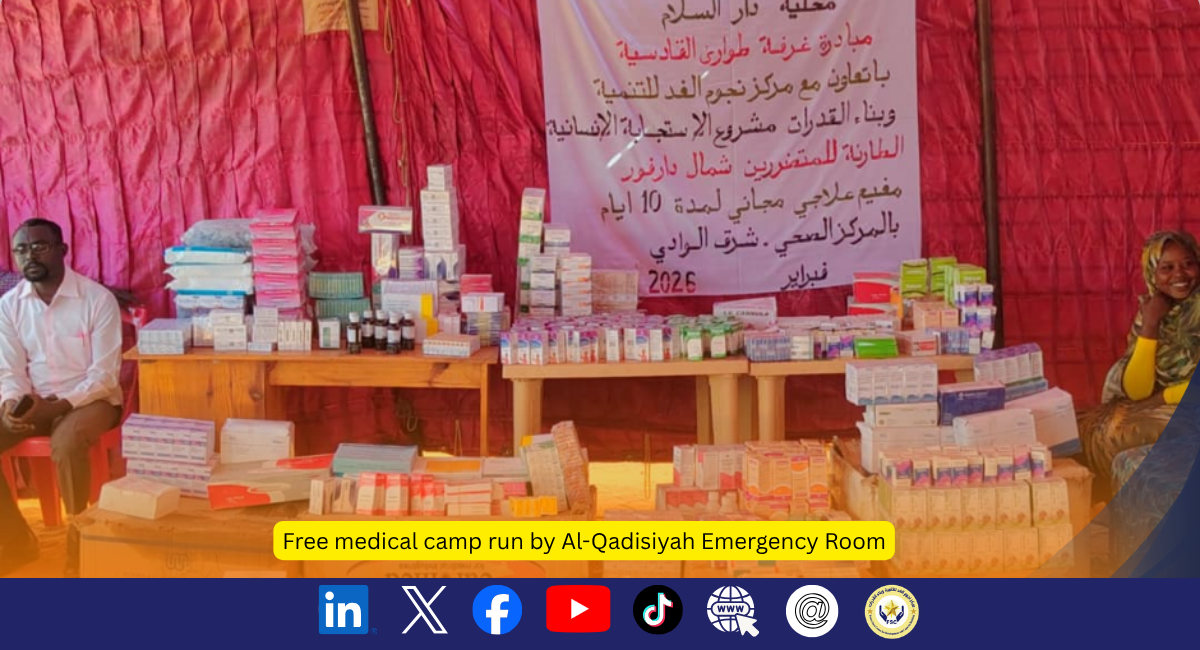
A medical camp provided consultations, clinical examinations, essential medicines, diagnosis and referral of complex cases. Medicines distributed included amoxicillin, ibuprofen, metronidazole, steroids, insulin, magnesium, topical creams and joint injections. Health education covered hygiene, disease prevention and maternal health for pregnant and lactating women.
Two components addressed gaps specific to displacement settings. A male child circumcision initiative provided safe procedures with full surgical supplies, addressing a critical gap in IDP settings where the alternative is unsafe practice. Slaughterhouse hygiene improvements strengthened sanitation systems to reduce foodborne disease risk — a preventive measure protecting far more people than those who attend a clinic.
Direct beneficiaries: 4,559 — 2,189 males and 2,370 females.
The partner initiatives
Rainbow for Peace and Development · Rawafid Organization · Al-Salam Charitable Initiative · Faza Al-Khayr Group · Sanabil Al-Khayr · Rakubat Al-Salam · Mama Africa for Humanitarian · Youth of Construction and Development · Dar El-Salam Women ERR · Hayaa Kareema · Nur Al-Shams · Al-Mutataweeyin · Kabkabiya Women ERR · Nabaa Al-Ataa Charitable Association · Nabda Al-Hayaa · Al-Qadisiyah Emergency Room · Al-Nahda Liltanmia · Doof and Rahama Initiative · Waey Organization · Al-Ayadiy Al-Mutakatifa · Ashamna Fi Bukra · Amiriha School IDP Gathering Committee · Kabkabiya El Gadeeda School IDP Committee · Jabal Si School IDP Center · Um Al-Mumineen IDP Center · Al-Taheel Al-Tarbawi IDP Center · Al-Zaharaa School IDP Center · Al-Wahda Al-Eadaryah IDP Center
Seven of these are IDP centers and school gathering committees — displaced communities organizing their own response from inside the shelters where they live.
About Future Stars Center
Future Stars Center for Development and Capacity Building (FSC) is a youth-led organization advancing humanitarian support, capacity building, sustainable development and peace-building across Sudan and Uganda. Rather than implementing activities directly, FSC provides structured micro-grants, technical oversight and field monitoring to verified community mutual-aid groups and local civil society organizations.
This project was implemented in partnership with Saferworld and the Sudan Humanitarian Fund (SHF).