Tawila town, 60 kilometers west of El Fasher, has absorbed wave after wave of displacement over the past two years. When RSF forces took control of El Fasher on 25 October 2025, more than 466 additional families arrived in Tawila within the month alone, fleeing a warzone and an economic collapse that left them with almost nothing. It was into this reality — not despite it — that the Sanad mentee group chose to launch Pink October.
Awareness That Reached the Camps
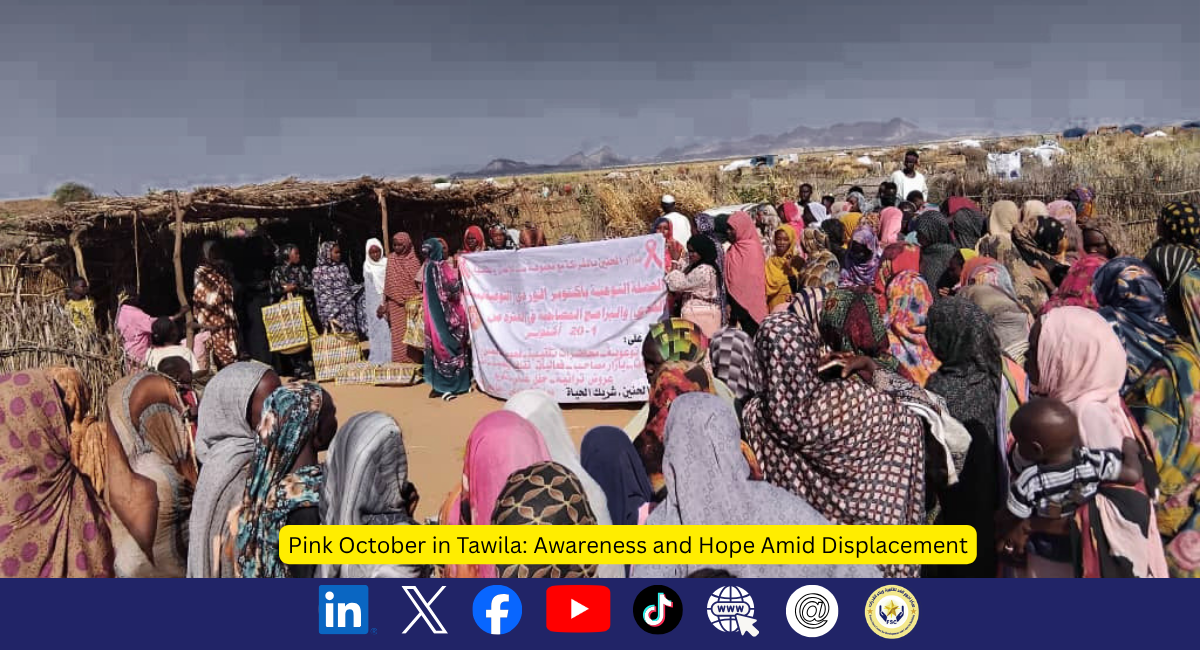
On 25 October, the group launched its breast cancer awareness campaign across Kaima Camp, Kanjara, and Taweela Al-Omda, working with camp leaders, local committees, and volunteers to bring in women, youth, and displaced and host-community residents alike. The sessions combined health education with a quieter message: solidarity over division. Participants left not only with information on early detection, but with a renewed sense of collective responsibility toward one another.
A Bazaar Built by Women, For Women
That same day, the Al-Haneen Pink Bazaar opened at Lamya Café Park. Every product on display — handmade by women and girls from displaced and host communities alike — turned a market stall into a statement of resilience. A women’s choir performed as newcomers and longtime residents mingled in what organizers describe as a rare moment of shared joy amid hardship. Beyond the atmosphere, the bazaar gave women artisans real income: one entrepreneur later said the earnings would let her send her daughters to school, with bags, pens, and books to match.
Care Where People Actually Are
From 24 to 26 October, a mobile clinic moved through Bargo Camp, Kaima Camp, and Tawila Town, offering free checkups and consultations to women, girls, and other vulnerable residents. Several cases identified during screening were referred for follow-up care, and a preliminary health database now exists to support that ongoing work.
Dignity, Delivered
On 27 October, in Rowand East Camp, the group distributed dignity kits and ran awareness sessions on personal health for displaced adolescent girls and women — carried out in coordination with the Humanitarian Affairs Office and local Women’s Affairs authorities. Demand outpaced supply; strict selection criteria helped manage it, but the gap remains real.
What Comes Next
Beneficiaries were clear about what they want to see continue: more awareness sessions, more clinical screening, and — notably — more efforts to include husbands and fathers in the conversation. Many have already committed to launching their own community initiatives supporting breast cancer survivors and early-detection efforts, a sign that Pink October in Tawila did not end when October did.