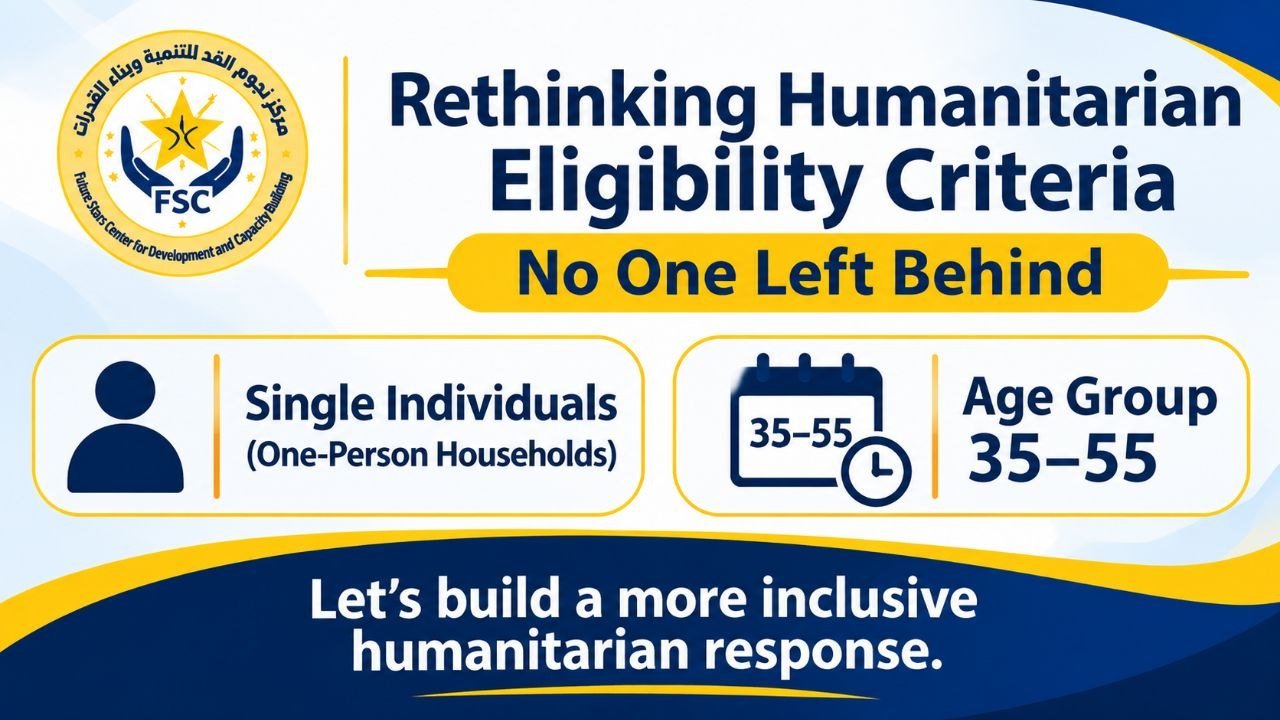
Eligibility criteria exist to direct assistance to those most in need. But when they rely on household size or age brackets rather than actual vulnerability, they can exclude people whose needs are just as real, notably individuals living alone and adults aged 35 to 55.
In Sudan and Uganda, in contexts of displacement and refuge, humanitarian and development programmes use eligibility criteria to target assistance and opportunities to the most vulnerable people. These tools are necessary. Resources are limited, and prioritisation is unavoidable.
The question is whether these criteria always reach everyone who is eligible in practice, or whether, at times, they exclude affected people because of social or age categories that do not reflect their actual needs. Two groups deserve closer attention and review.
1. People living alone: single-person households
When individuals living alone try to register for humanitarian assistance, the answer they receive is sometimes that programmes are designed for families only. This raises a basic question: does not belonging to a multi-person household make someone less deserving of support?
Some people live alone with no family support, no stable income and no access to work. They face severe poverty and food insecurity and cannot meet their basic needs. Their situation is no less serious because there is only one of them.
Humanitarian need should not be measured by the number of people in a household, but by the level of vulnerability and actual need.
2. The overlooked middle: adults aged 35 to 55
Where do people aged 35 to 55 fit in support and empowerment programmes? Many education grants, vocational training schemes, financing opportunities, job placement initiatives and youth programmes set their upper age limit at 35. At the same time, this group often does not qualify for programmes targeting older persons, which typically start at 50, 55 or even 60.
As a result, many people are caught between age categories, with few opportunities that match their needs and circumstances. Yet they still have experience, capability, ambition and the desire to learn, work and contribute to their communities. Many support families, or have lost their livelihoods to war and displacement, and need real opportunities to rebuild and plan for a more stable future.
Recommendations
- Base eligibility on actual need and vulnerability, rather than relying exclusively on age or marital and household status.
- Extend education, vocational training, skills development, livelihoods and microfinance opportunities to people over 35.
- Establish clear, transparent mechanisms to register and assess individuals living alone, and ensure they can access the services and assistance they are entitled to.
- Involve affected people themselves in reviewing eligibility criteria and in designing the programmes that target them.
Conclusion
Humanitarian action rests on the principle of leaving no one behind. Criteria designed to set priorities should not become barriers that deny eligible people support, protection and empowerment. Reviewing eligibility criteria is not merely a procedural matter. It is a step towards greater fairness and genuine inclusion in humanitarian and development response.
Join the conversation
We invite colleagues in humanitarian and development organisations, and donors, to share their experiences and views:
- Do you have programmes that include people living alone?
- Do you run educational or economic initiatives that target people aged 35 to 55?
- Have you ever reviewed your eligibility criteria to include groups that were previously excluded?
Sharing experiences and good practice can help develop fairer and more inclusive criteria.